Made for sales teams
Your best rep's knowledge, available to every rep
Your best reps carry all the context in their heads. Fabric turns it into a searchable playbook that writes itself from real conversations, so every rep sells like a veteran.
Your best reps carry all the context in their heads: what works against which competitor, how to handle pricing objections, which case studies land with which buyer, what the real concern is behind the stated objection. They've built this through hundreds of conversations, and none of it is written down in a way the rest of the team can use. The battlecard was last updated six months ago. The objection handling doc reflects last year's product. When a new rep joins, they shadow someone for a few weeks and then figure the rest out through trial and error. The team's collective intelligence is locked in individual heads, and every new hire starts from scratch.
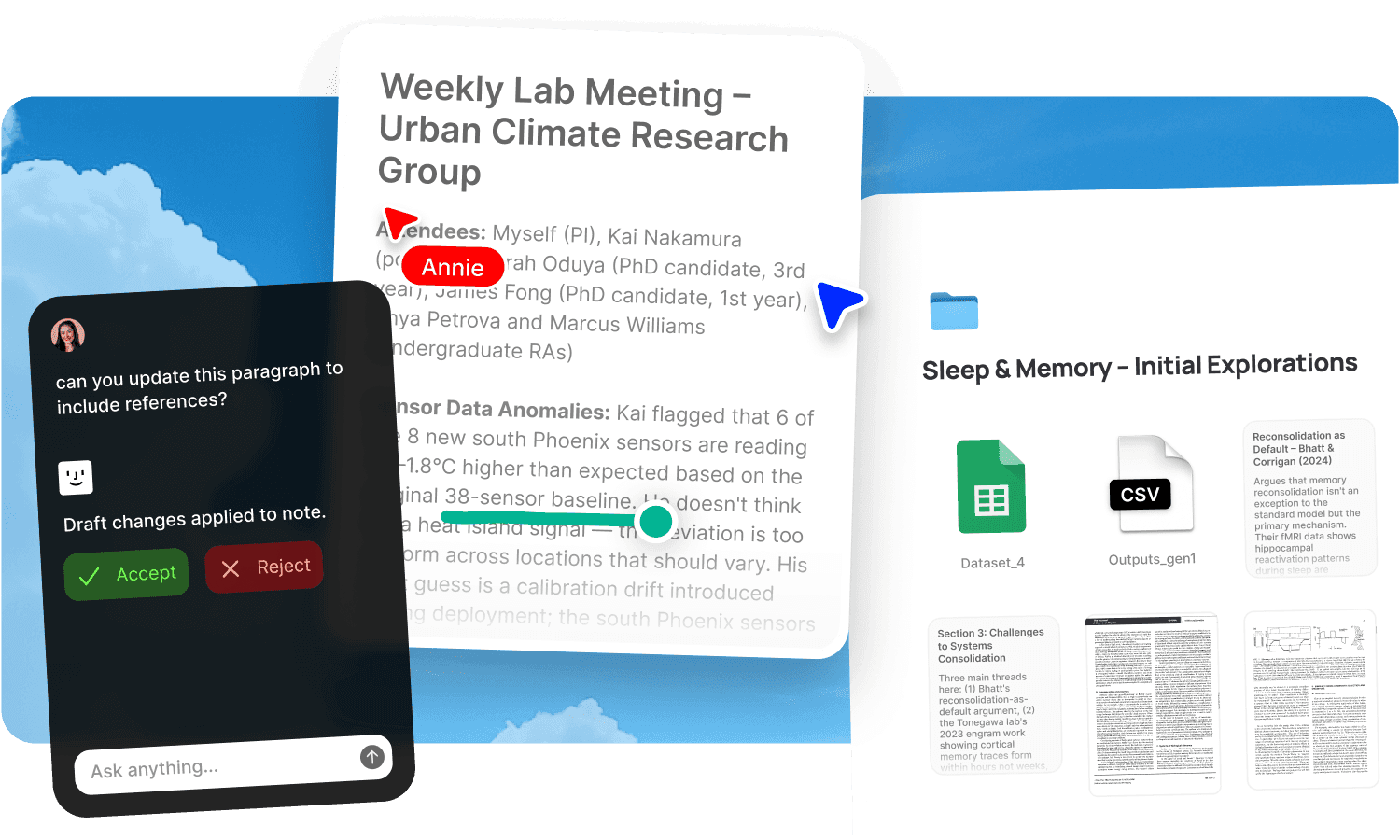
Fabric builds a self-writing sales knowledge base from your team's real conversations. AI search makes the whole team's memory available to everyone. Agents handle the workflow around every deal. The new hire sells like a veteran because the system works for them from day one.
A self-writing sales knowledge base
Self-writing docs connect to your team's Slack and meetings and produce a sales knowledge base from real conversations:
Objection handling assembled from how your best reps actually handle objections on calls, not from a theoretical playbook someone wrote once.
Competitive intel that stays current as the landscape shifts, drawn from call transcripts, deal notes, and Slack discussions about competitors.
Pricing precedents and win/loss context captured from the conversations where deals were won, lost, and negotiated. What worked, what didn't, and why.
Battlecards that update themselves as the market changes. The battlecard reflects what your team is actually saying and hearing this quarter, not last year.
New reps ramp faster because the playbook writes itself from the team's collective experience.
AI search across the team's full memory
AI search makes the whole team's knowledge available to everyone. Ask "how did we win against [competitor] in healthcare" and get cited answers from call transcripts, CRM notes, and Slack threads, linked to the exact source. Ask "what objections come up on enterprise deals" and get patterns drawn from across the team's conversations.
The search works by meaning across every content type: call recordings, meeting transcripts, emails, documents, and Slack threads. The AI assistant synthesises across sources, so "summarise how we've positioned against [competitor] in the last quarter" draws from every relevant conversation.
A rep preparing for a call doesn't need to ask a colleague who's handled a similar deal. They search, they get cited answers, and they walk in prepared.
Agents that handle the deal workflow
Agents handle the workflow around every deal so reps stay on selling:
One reads the call recording, extracts action items, updates the deal notes, and creates the follow-up tasks with deadlines.
Another drafts the follow-up email in the rep's voice and leaves it in their drafts, ready to review and send. The tone matches. The commitments from the call are included. The rep reviews and hits send.
Another pulls together a pre-call brief from your meeting history, competitive intel, and past interactions with that account. Full context before every conversation without the rep manually assembling it.
The selling stays human. The deal administration doesn't have to be.
Tracked sharing for every piece of collateral
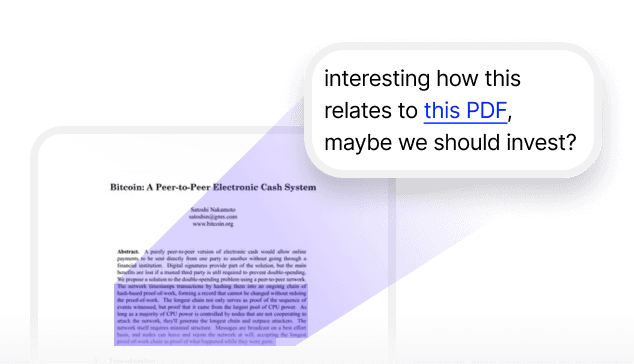
Publish decks, proposals, case studies, and pricing documents with password protection and link analytics. Create individually named tracking links per prospect stakeholder. See who's opened the material, how long they spent, which sections they viewed, and whether they came back.
"I noticed you spent time on the enterprise case study" is a different follow-up from "just checking in." The analytics turn silent deals into readable signals.
For the full tracked-sharing workflow, see sales collateral. For lightweight pipeline management, see CRM.
New reps sell like veterans from day one
When a new rep joins, they inherit the team's full searchable knowledge base: every objection pattern, every competitive positioning, every win/loss, every pricing precedent. They ask the AI assistant "how do we handle the security objection on mid-market deals" and get a cited answer drawn from how the best reps have actually handled it on calls.
Self-writing onboarding docs stay current as the product, the market, and the competitive landscape evolve. The ramp-up time drops because the new hire learns from the team's accumulated experience, not from a stale training deck.
For structuring sales onboarding, see onboarding new team members.
Who on the team uses Fabric
Sales professionals manage deal context and prospect relationships. Founders doing founder-led sales build the knowledge base that scales with the first hires. Product managers access call transcripts and customer feedback for product decisions. Customer service teams use the same AI search approach for their own knowledge bases.
For individual sales workflows, see Fabric for sales. For deal-level context management, see client work and deliverables.
Get started
Turn your best rep's knowledge into a system that works for every rep. Try Fabric free. See pricing for teams.
FAQs
Does the sales knowledge base write itself?
Yes. Self-writing docs produce a sales knowledge base from your team's calls, Slack, and deal discussions. Objection handling, competitive intel, and battlecards stay current from real conversations.
Can any rep search across the team's full call history?
Yes. AI search reads inside every call transcript, email, document, and Slack thread. Ask a question and get cited answers from the team's collective experience.
Can agents draft follow-up emails?
Yes. Agents draft the follow-up in the rep's voice from the call transcript, including commitments and action items. The rep reviews and sends.
Can agents create tasks from call recordings?
Yes. An agent reads the call, extracts action items, updates deal notes, and creates follow-up tasks with deadlines.
Can agents brief reps before calls?
Yes. An agent assembles a pre-call brief from meeting history, competitive intel, and past interactions with the account. Full context without manual preparation.
Do battlecards stay current?
Yes. Self-writing battlecards update from your team's actual conversations about competitors. They reflect what reps are hearing and saying this quarter, not what someone wrote last year.
Can we track when prospects open our materials?
Yes. Publish with link analytics and create named tracking links per stakeholder. See who's viewed the material, how long, and which sections.
Can new reps access the team's full knowledge base?
Yes. Every objection pattern, competitive positioning, and deal precedent is searchable from day one. New hires ramp faster because the playbook already exists.
Can I search across deals and other content together?
Yes. Call transcripts are searchable alongside documents, emails, Slack threads, and everything else. A competitor mentioned on a call and a competitive analysis document are findable in the same search.
What tools does Fabric connect to?
Fabric connects to Slack, Google Drive, Dropbox, Notion, Gmail, and meeting tools. See connections for the full list.
Is our deal data secure?
Yes. Fabric uses AES-256 encryption and is CASA Tier 2 compliant. Your data is never used to train AI models.
How is this different from a CRM with call recording?
A CRM stores call recordings per deal. Fabric builds a self-writing knowledge base from those conversations: objection handling, competitive intel, battlecards, and pricing precedents that the whole team can search. The difference is between storing call logs and having the team's collective intelligence searchable and usable by every rep.