Made for people ops
Policies that update themselves
Policies change, onboarding evolves, benefits get updated. The employee handbook is always behind. Self-writing docs fix that.
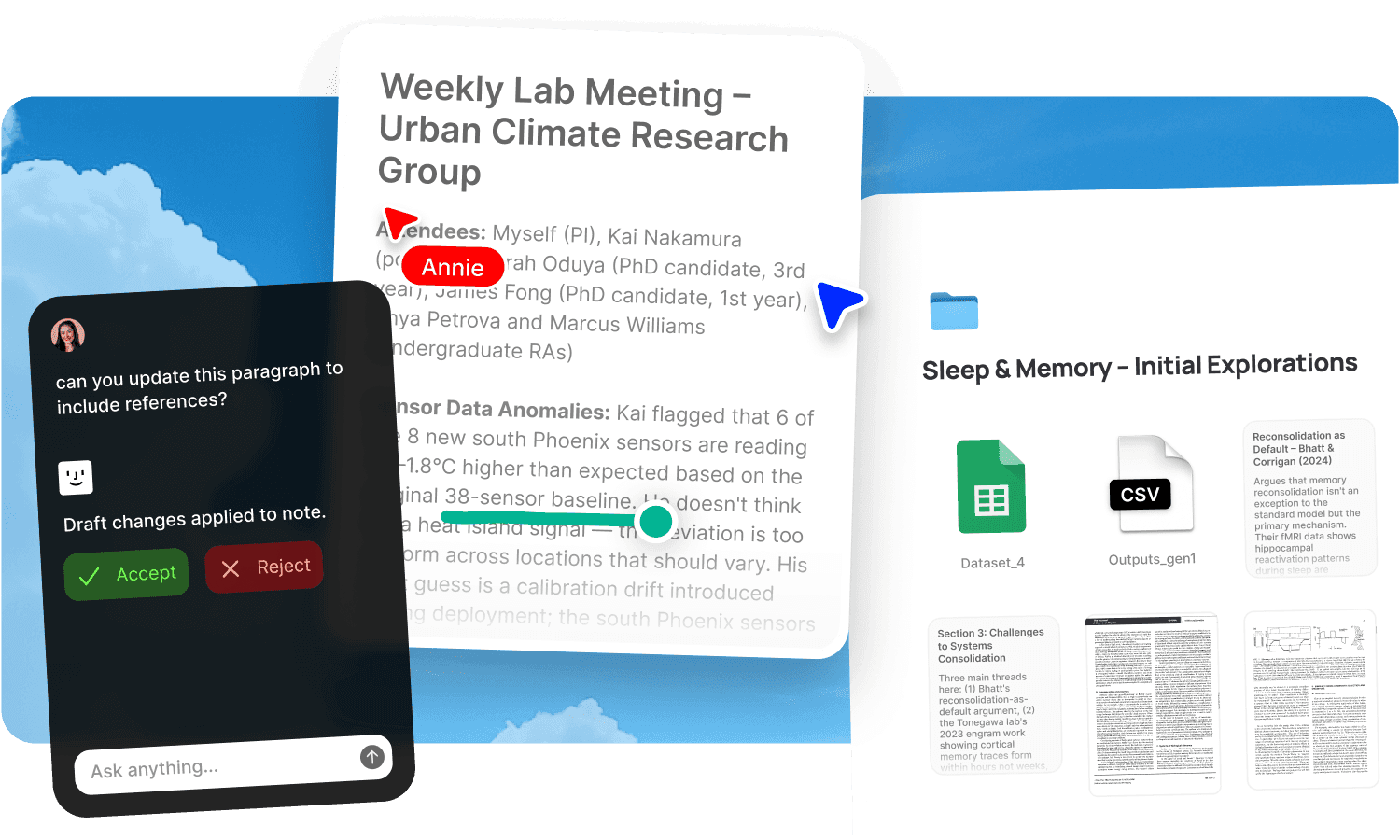
Policies change, onboarding evolves, benefits get updated, and the employee handbook is always behind. Someone updated the parental leave policy in a meeting three months ago. The Slack announcement went out. The handbook still says the old thing. A new hire asks "how do I submit an expense report" and gets an answer from a wiki page last edited in 2024. The people team knows the current policy. The documentation doesn't. And updating it competes with everything else the people team is doing, which means it doesn't happen until someone gets the wrong answer and escalates.
Fabric's self-writing docs produce onboarding guides and policy documentation that reflect the current state of your company. AI search gives any employee the correct, current answer instantly. Agents handle the administrative machinery so the people team focuses on the human side.
Self-writing policies and onboarding guides
Self-writing docs connect to your Slack and meetings and produce documentation that stays current without manual maintenance:
Onboarding guides that reflect the current state of your company, not a snapshot from when someone last had time to update the wiki. Processes change. The guide changes with them.
Decision logs capturing policy changes as they're discussed in meetings and Slack. There's always a record of what changed and why, assembled from the conversations where the decisions were made.
Policy documentation that updates as the people team discusses and implements changes. The handbook reflects what's true now, not what was true when it was last manually edited.
The documentation stays current because it's assembled from what the team is already saying and deciding.
AI search so any employee gets the right answer
AI search means any employee can ask "what's our parental leave policy" or "how do I submit an expense report" and get the current, correct answer with a source link. The search works by meaning across every policy document, meeting transcript, and Slack discussion in the workspace.
The AI assistant handles follow-up questions. "Does the parental leave policy apply to adoptive parents" gets a cited answer drawn from the policy document and the meeting where the extension was discussed. Employees get answers without submitting a ticket or waiting for someone on the people team to respond.
This reduces the repetitive question load on the people team. The same ten questions that come in every week are answered by the system, cited and accurate, without anyone typing the response again.
Agents that onboard, update, and coordinate
Agents handle the administrative machinery of people operations:
One monitors policy discussions across your channels and updates the relevant handbook sections. When the team agrees on a new remote work policy in a meeting, the agent updates the documentation without someone filing a task to do it later.
Another generates a tailored onboarding checklist for each new hire based on their role, team, and location, then creates the tasks and sends the welcome email. The onboarding process runs itself.
Another assembles the weekly people ops digest: new hires starting, policy updates, open items, and upcoming deadlines, posted to the team channel.
The administrative overhead shrinks. The people team stays on the human work.
A searchable record of every policy decision
Policy changes accumulate over years. "When did we change the expense limit?" "Why did we switch benefits providers?" "What was the old remote work policy?" In most setups, the answers are in email threads and meeting notes that nobody can find.
The decision log captures every policy change with context: what changed, when, why, and who decided. The full history is searchable. When a question about a past policy arises, the answer and the reasoning are findable in seconds.
Onboarding that scales with hiring
Every new hire needs the same core information and a set of role-specific context. Self-writing onboarding docs stay current as processes evolve. The AI assistant answers new hire questions from the full knowledge base: policies, processes, team context, and company history.
As the company grows, the onboarding experience stays consistent because it's powered by the same searchable, self-updating documentation. The fiftieth hire gets the same quality of onboarding as the fifth.
For structuring the onboarding workflow, see onboarding new team members and the guide to onboarding collaborators.
Secure sharing for sensitive documents
Publish policy documents, offer letters, and HR materials with password protection and link analytics. Share documents with controlled access and track when they've been viewed. Update a document and the link serves the current version.
Who on the team uses Fabric
The people team manages the knowledge base, but the whole company benefits. Founders and startups use self-writing docs to build people infrastructure before they can hire for it. Customer service teams use the same AI search approach for their own knowledge bases. Educators managing institutional processes use similar onboarding and policy workflows.
For building the underlying knowledge base, see team wiki. For the broader onboarding workflow, see onboarding new team members.
Get started
Give your people team policies that update themselves and onboarding that scales with hiring. Try Fabric free. See pricing for teams.
FAQs
Can any employee search for policy answers?
Yes. AI search lets any employee ask a question in plain language and get the current, correct answer with a source link. No ticket required.
Do policies update automatically when they change?
Yes. Self-writing docs monitor policy discussions in your Slack and meetings and update the relevant documentation. The handbook reflects what's current, not what was last manually edited.
Can agents generate onboarding checklists?
Yes. Agents generate tailored onboarding checklists based on role, team, and location, then create the tasks and send the welcome email.
Can agents update the handbook from policy discussions?
Yes. An agent monitors policy conversations across your channels and updates the relevant handbook sections when changes are agreed.
Is there a record of why policies changed?
Yes. The decision log captures every policy change with context: what changed, when, why, and who decided. The full history is searchable.
Do the onboarding guides stay current?
Yes. Onboarding docs update from your team's activity. The guide reflects the current state of the company, not a snapshot from when it was last manually updated.
Can the AI handle follow-up questions about policies?
Yes. The AI assistant answers follow-up questions with cited answers from policy documents and the discussions where decisions were made.
Does this reduce the question load on the people team?
Yes. The repetitive questions that come in every week are answered by AI search with cited, accurate responses. The people team handles the nuanced, human cases.
Can we share HR documents securely?
Yes. Publish with password protection and link analytics. Control access and track when documents have been viewed.
What tools does Fabric connect to?
Fabric connects to Slack, Google Drive, Dropbox, Notion, Gmail, and meeting tools. See connections for the full list.
Is employee and HR data secure?
Yes. Fabric uses AES-256 encryption and is CASA Tier 2 compliant. Your data is never used to train AI models.
How is this different from a wiki or HRIS knowledge base?
A wiki requires someone to write and maintain every page. An HRIS knowledge base is limited to what's been manually entered. Fabric's self-writing docs produce and update policy documentation from your team's actual discussions. AI search works by meaning, not keyword. Agents handle the administrative tasks. The documentation stays current because it's assembled from what the people team is already doing, not from a separate maintenance task.