Blog
Resurrecting lost knowledge

Jonathan Bree
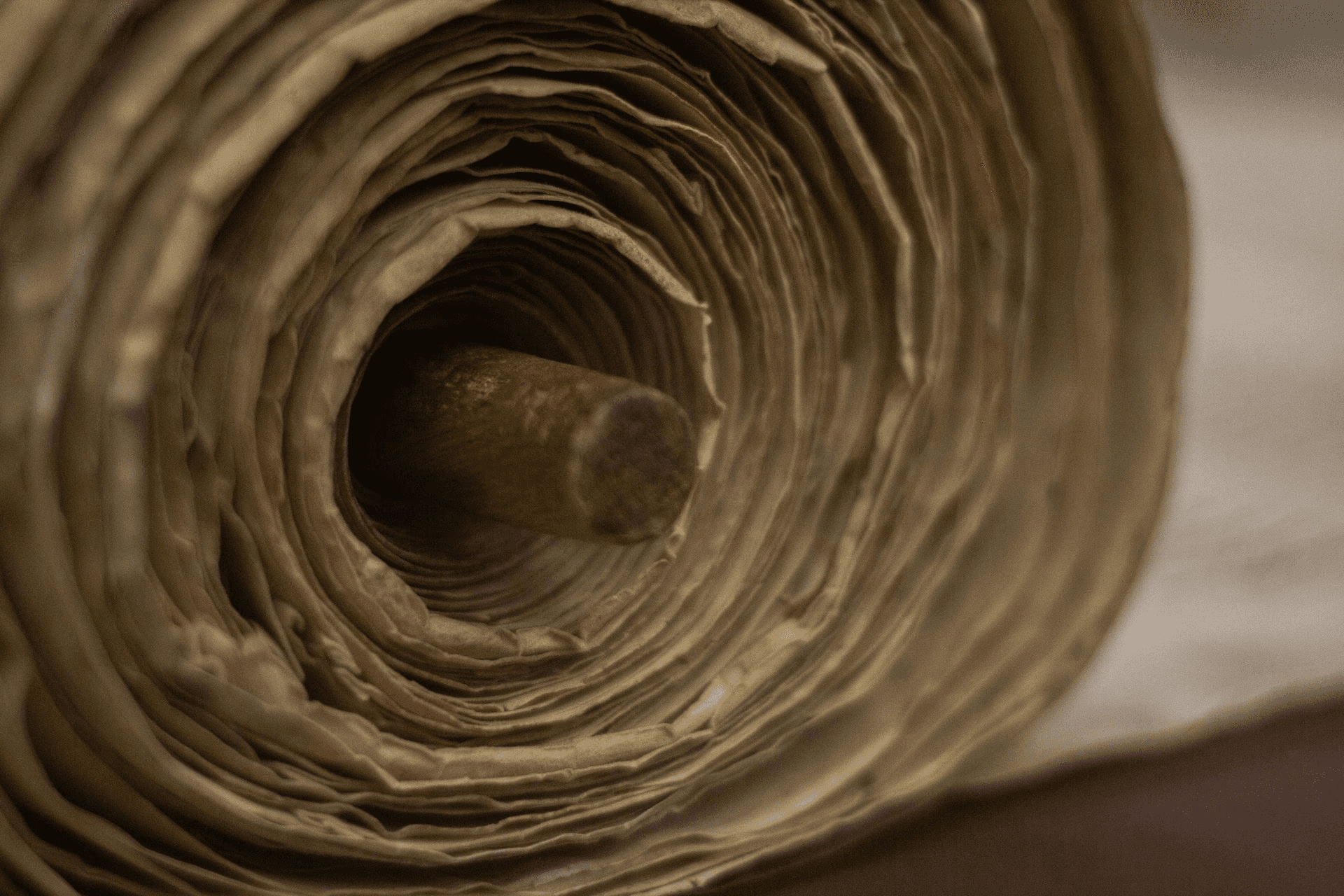
In 79 AD, Mount Vesuvius erupts, burying a huge villa owned by none other than Julius Caesar's father. Hidden within its walls is a vast library of delicate papyrus scrolls, which get instantly carbonized by the volcanic heat...
But they're not destroyed. In fact, quite the opposite.
The carbonization preserves the scrolls, where they are eventually rediscovered by a farmer almost 2 millennia later.
If these fragile, preserved scrolls can be decoded, they would double the corpus of surviving text from antiquity, recovering knowledge, ideas, stories and more from the past. Perhaps there's epic poems or Shakespeare equivalents buried in the scrolls. But they are incredibly fragile. In fact, only with a particle-accelerator and computer vision can the ancient scrolls be "virtually unwrapped" – making it possible to read the lost information.
The mission to resurrect ancient information from the scrolls of Vesuvius got us thinking.
• What are some other "Vesuvius scrolls" in our digital lives?
• How much of our digital information also becomes lost, or irretrievable over time?
• How much information do we store, only to never look at it again?
Even losing the original context can mean losing legibility for a piece of information – a link, file or document can mean very little without the original intention and rationale for capturing it.
Rather than ink fading or physical degradation, our information today mainly gets lost through quantity. Every day, we're consuming a firehose of information, unprecedented in human history. The result is that ideas and information are continuously being buried, lost in the deluge.
If AI is how we uncover ancient buried data from the physical world, then perhaps it's also the tool for uncovering and resurfacing buried digital data too.
Knowledge creation is the force that moves the world forwards. But little thought is given to retrieval and preservation. We create, capture, and it's gone again.
This is what we're thinking about with Fabric.
We're building towards a unified home for all information – where even the most obscure, stranded sources of data can be piped in, and represented. Where anyone can build "connectors" – autonomous pathways for information to flow in and be intelligently networked with related ideas and concepts.
If knowledge can be automatically brought together, resurfaced and connected, maybe we can all get a little wiser, and think a little better.
It's time to read the scrolls.
If you want to read more about the mission to decode the Vesuvius scrolls – take a look here: https://scrollprize.org/
Other blog posts:

Dropbox is eating your disk space
Google Drive wasn't built for large files
iCloud is not a real backup strategy
How much cloud storage do you actually need?
NAS vs cloud for creative teams in 2026
Syncing a game build across your team without Perforce
Your texture library needs a real home
Blender files are getting bigger and your workflow isn't keeping up